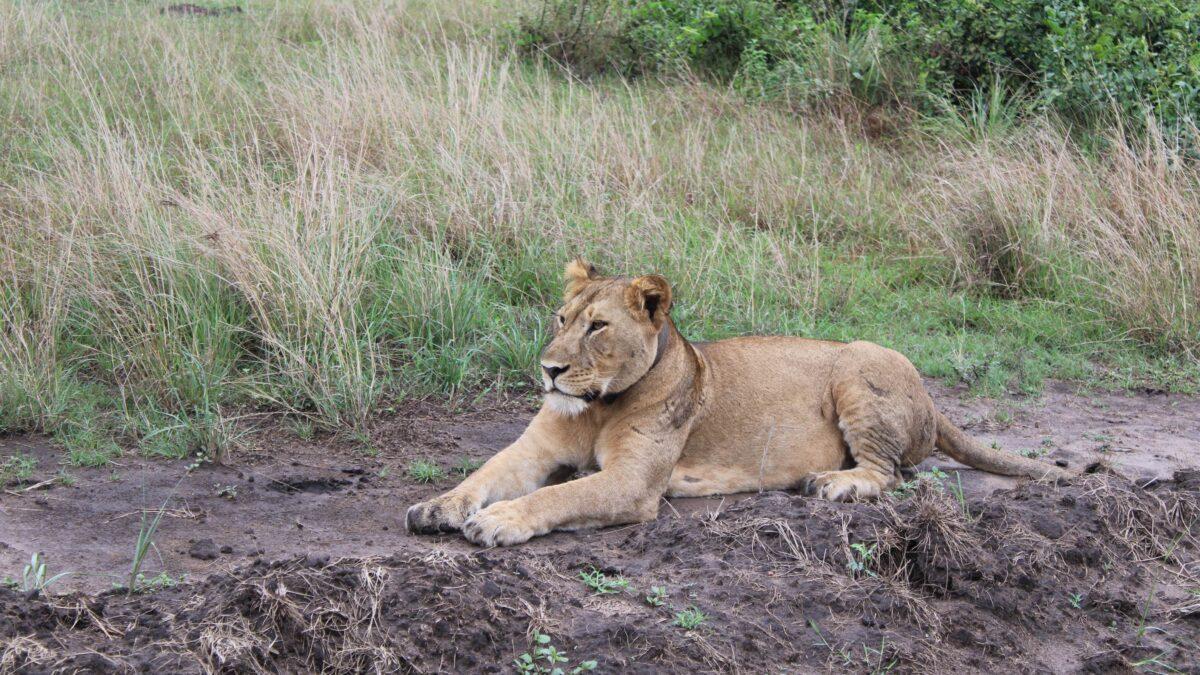
Lions, especially those in prides, rely on coordinated strategy rather than speed alone when hunting. A typical hunt often begins at dusk or during the night, when temperatures are cooler and visibility favors the predators. Lionesses usually take the lead, spreading out and using vegetation or terrain as cover while silently stalking prey such as antelopes or zebras. They move cautiously, reducing noise and staying downwind to avoid detection, gradually closing the distance before launching a sudden, high-speed ambush.
Once the attack begins, the hunt becomes a burst of power and precision. Lions can sprint at high speeds over short distances, aiming to isolate a weaker or slower individual from the herd. One lion may chase while others position themselves strategically to block escape routes. When they reach the prey, they typically bring it down by tripping it or leaping onto its back. The final kill is often made by clamping their strong jaws around the prey’s throat, suffocating it, or sometimes biting the neck to break it.
After a successful catch, the pride quickly gathers to feed, starting with the dominant male if present, followed by lionesses and then cubs. Feeding can be intense and competitive, with growling and pushing as each lion tries to secure a share of the meat. The carcass is consumed rapidly to avoid losing it to scavengers like hyenas. After eating, lions usually rest for long periods, conserving energy until the next hunt, as successful kills are not guaranteed every time.