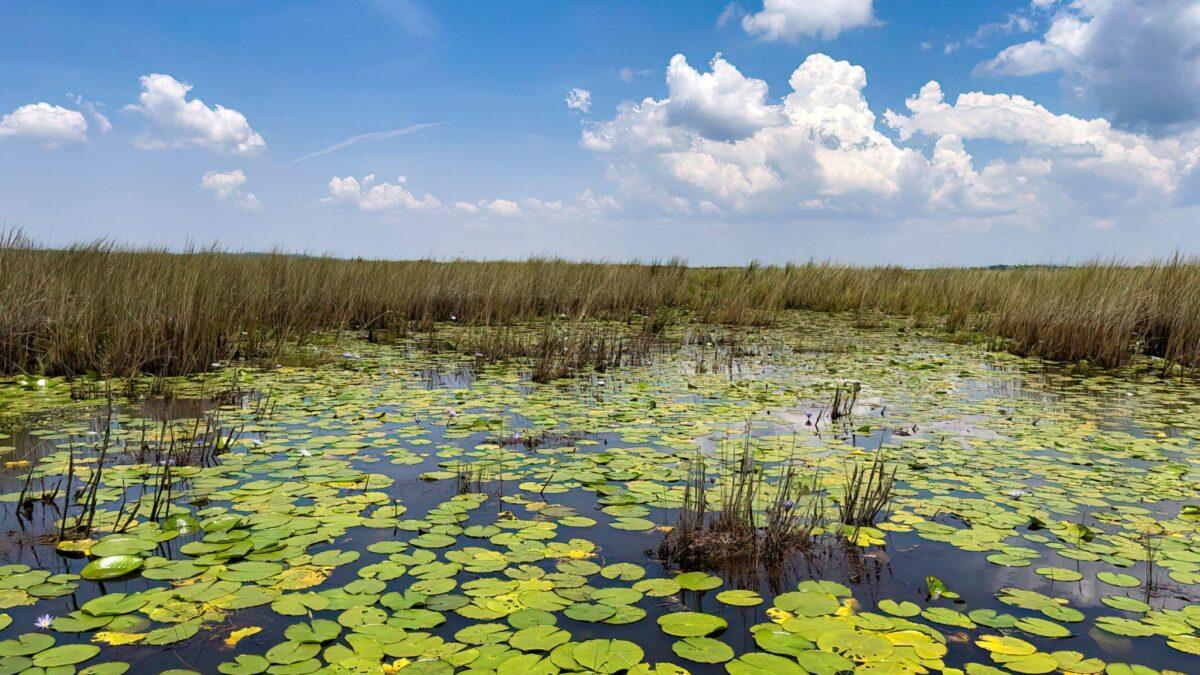
Uganda has many swamps and wetlands, which are found around lakes, rivers, and low-lying areas. Some well-known examples include Mabamba Swamp, Lwera Wetland, Nakivubo Wetland, and wetlands around Lake Kyoga. These areas are often covered with grasses, papyrus, reeds, and other water-loving plants.
Swamps are very important because they store and filter water. They absorb excess rainwater and help reduce flooding, while also releasing water slowly during dry periods. Wetlands also help improve water quality by trapping sediments and pollutants before they reach lakes and rivers.
Uganda’s swamps provide important habitats for wildlife and birds. They support fish, frogs, insects, reptiles, and many bird species, including the famous shoebill. They also provide breeding and feeding grounds for fish and other aquatic animals.
Swamps are also important to local communities. People depend on wetlands for fishing, farming, papyrus and craft materials, grazing, and other sources of income. In addition, wetlands help regulate the climate by storing carbon and supporting healthy ecosystems.
Therefore, protecting Uganda’s swamps is essential. Draining wetlands, dumping waste, uncontrolled farming, and construction can destroy these valuable ecosystems. Conserving them helps protect water resources, wildlife, communities, and Uganda’s natural heritage.