
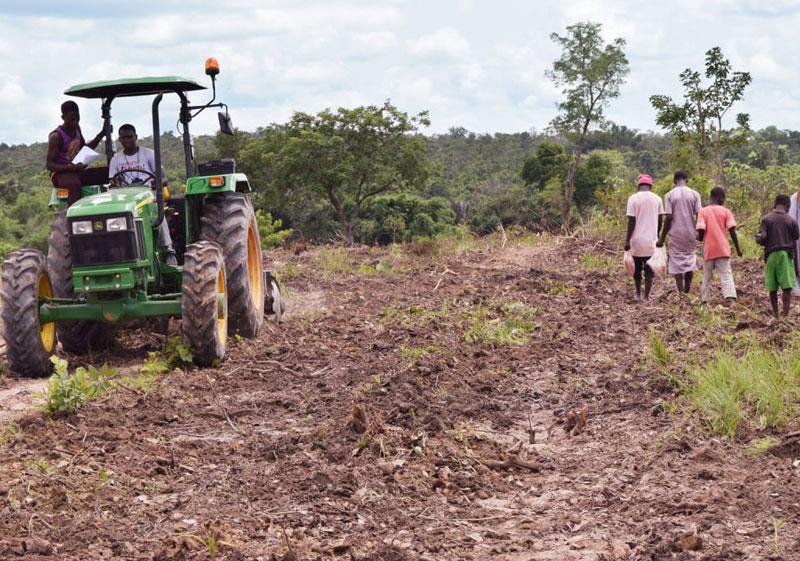
Large-scale farming with tractors in Uganda is an important opportunity for transforming agriculture from subsistence farming into commercial production. Tractors make it possible to cultivate large areas of land within a shorter period and reduce dependence on manual labour. They can be used for ploughing, harrowing, planting, spraying, weeding, harvesting and transporting farm produce.
Farmers can use tractors to grow crops such as maize, rice, soybeans, sunflower, wheat, cotton and other commercial crops. Mechanized farming improves efficiency and allows farmers to prepare land and plant at the right time, which can contribute to better yields. Large farms can also benefit from modern irrigation, improved seeds, fertilizers and proper storage facilities.
Tractor ownership can also become a business opportunity through tractor-hire services. Farmers who cannot afford to buy their own machinery can pay tractor owners to prepare their land. A commercial farmer can therefore use tractors on their own farm and hire them out to surrounding farmers when they are not needed. This can create employment for tractor operators, mechanics and other agricultural workers.
However, large-scale mechanized farming in Uganda requires significant investment in land, tractors, fuel, maintenance, farm inputs and skilled workers. Farmers also need reliable markets for their produce and proper storage facilities to reduce post-harvest losses. With good planning, access to financing and appropriate agricultural technology, tractor-based farming can increase food production, create jobs and contribute significantly to Uganda’s economic development.