Ntusi, also spelled Ntuusi, is a major Later Iron Age archaeological landscape in Sembabule District, Uganda, centered on ancient occupation mounds and the Bwogero basin. Occupied for several centuries during roughly the 10th–15th centuries CE, it provides important evidence for the emergence of larger, increasingly complex societies in the Great Lakes region. UNESCO World Heritage Centre
What survives
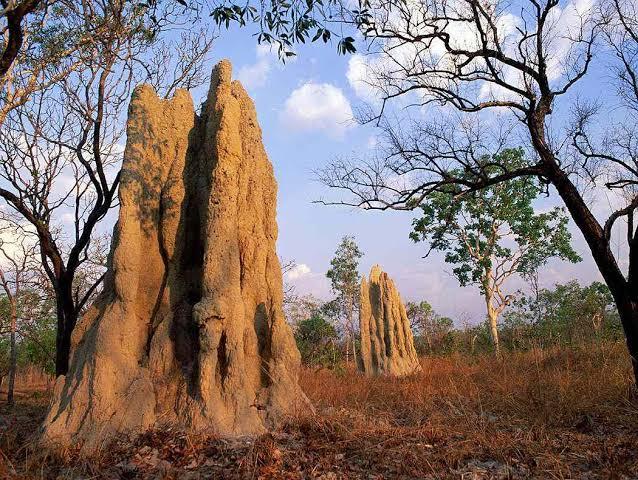
The site’s most conspicuous features are two large artificial mounds traditionally called Ntusi Male (NT IV) and Ntusi Female (NT III), together with the Bwogero basin. Excavations through the mounds have exposed deposits reaching about four meters deep, containing pottery, animal bone, stone and ash—the accumulated material of generations of settlement and communal activity. UNESCO World Heritage Centre
Life at ancient Ntusi
Archaeology portrays Ntusi as a substantial community rather than simply a ceremonial monument. Evidence includes cattle remains, grinding stones, sorghum, storage pits, ironworking and pottery; research indicates that cattle herding and agriculture were both fundamental to its economy. Recent analysis of its ceramics also points to localized pottery production and suggests that mound-building was connected with communal feasting and emerging sociopolitical organization. OBT Lab
Why it matters
Ntusi is particularly significant for understanding the development of political complexity in precolonial western Uganda. Its concentrated settlement and material culture predate nearby Bigo bya Mugyenyi; local traditions associate both landscapes with the legendary Bacwezi/Chwezi, although archaeological interpretation distinguishes material evidence from those later oral traditions. UNESCO World Heritage Centre
Heritage status
Uganda placed “Ntusi (man-made mounds and Basin)” on UNESCO’s World Heritage Tentative List in 1997, under the cultural category; being on the Tentative List is not the same as inscription as a World Heritage Site. UNESCO World Heritage Centre The landscape is especially valuable because much of its archaeology is expressed through earth, mounds, deposits and terrain rather than monumental stone ruins, making the relationship between the ancient settlement and surrounding grasslands central to understanding the site.