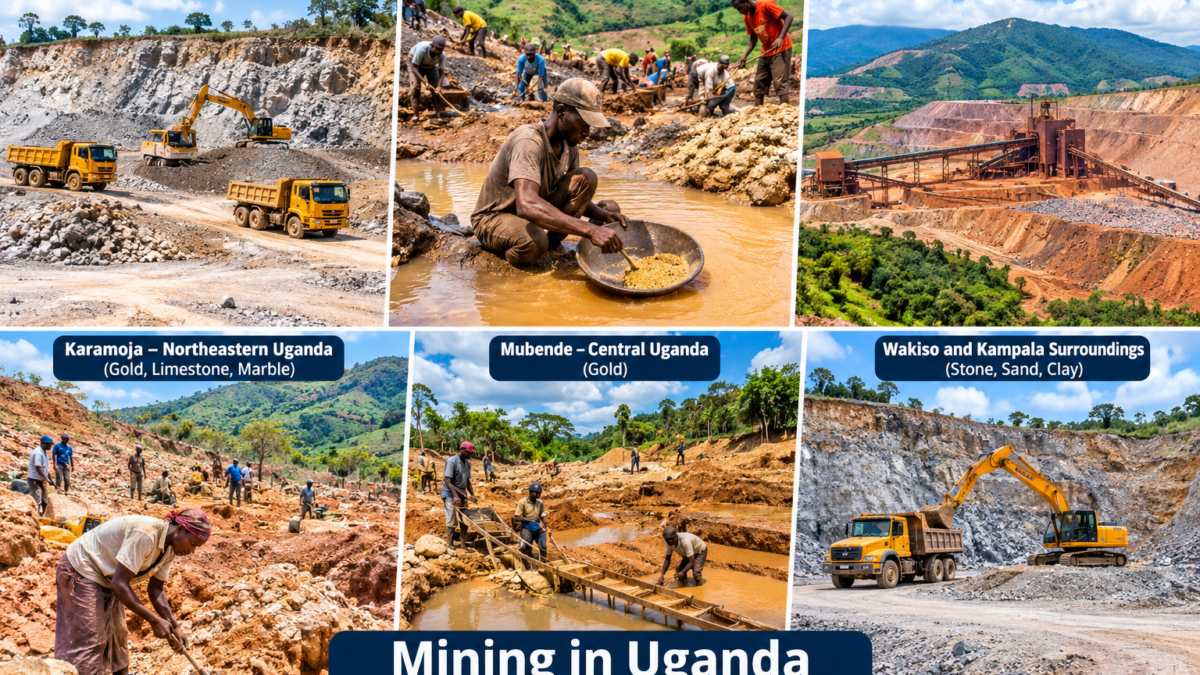
Mining in Uganda is mainly carried out in Tororo, Busia, Kasese, Karamoja, Mubende, Wakiso and the areas surrounding Kampala. Different minerals are extracted in these regions, including gold, copper, cobalt, limestone, phosphate, marble, stone, sand and clay. Mining contributes to Uganda’s economy by providing employment, raw materials and government revenue.
Mining has several negative effects on tourism in Uganda. It can destroy natural scenery, cause deforestation, pollute rivers and damage wildlife habitats. Noise, dust and heavy mining trucks can also disturb tourists and make some tourist destinations less attractive. This may reduce the number of visitors to affected areas.
However, mining can also benefit tourism indirectly. It creates employment and income for local communities, improves infrastructure such as roads and electricity, and generates government revenue that can be invested in tourism development. Historical mining sites, such as Kilembe copper mines in Kasese, may also attract visitors interested in industrial and heritage tourism.
In conclusion, mining plays an important role in Uganda’s economic development, but poorly managed mining can negatively affect tourism and the environment. The government should encourage sustainable mining, enforce environmental laws, restore damaged land and protect wildlife habitats to ensure that mining and tourism can develop together.