Kidepo Valley National Park is one of Uganda’s most spectacular wilderness destinations, located in the remote northeastern part of the country in the Karamoja region. Covering about 1,442 square kilometres, the park lies between rugged mountain ranges and vast open savannah plains, creating a landscape that feels remarkably wild and untouched. It was first established as a game reserve in 1958 and became a national park in 1962.
The Kidepo and Narus Valleys
The park is characterized by two major valleys: Kidepo Valley and Narus Valley. The Kidepo River and Narus River are seasonal, flowing mainly after heavy rains. During the dry season, water remaining in pools around the Narus Valley becomes extremely important to wildlife. This makes the Narus Valley particularly productive for game viewing, as animals gather around the remaining water sources.
The scenery is one of Kidepo’s greatest attractions. Visitors encounter enormous golden grasslands, rocky outcrops, dry riverbeds and distant mountains. The dramatic Morungole Mountains provide a beautiful backdrop, while the wide open plains allow visitors to appreciate the scale and isolation of the wilderness.
Wildlife
Kidepo supports an impressive variety of wildlife. Visitors may encounter lions, elephants, buffaloes, leopards, cheetahs, giraffes, zebras, hartebeests, eland, hyenas and several species of antelope. It is particularly valuable because it provides habitat for species that are uncommon or absent from many other Ugandan parks, including cheetah, caracal, bat-eared fox and striped hyena.
The park also has an important population of Rothschild’s giraffes. Their numbers were once extremely low, but conservation and translocation efforts have helped the population recover.
Birding in Kidepo
Kidepo is also an excellent destination for birdwatchers, with more than 475 recorded bird species. Some of the notable birds include the ostrich, secretary bird, kori bustard, Abyssinian roller, Abyssinian ground hornbill, red-throated bee-eater and Karamoja apalis. The park is particularly interesting for birders because of its large collection of dry-country species.
Culture and the Karamojong
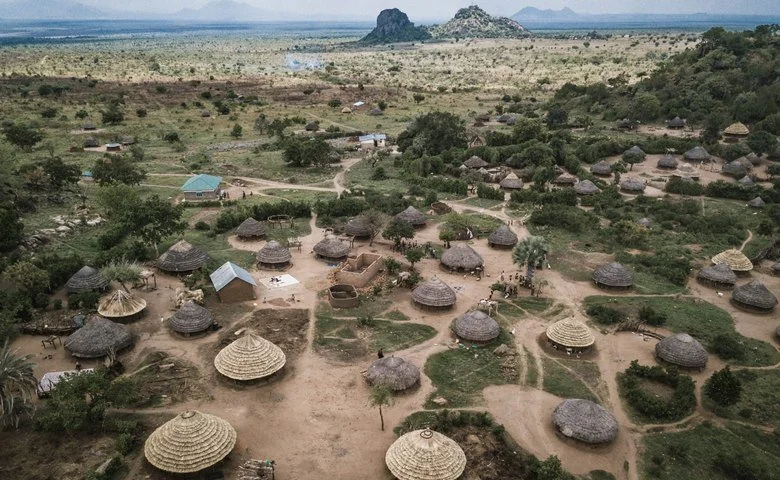
A visit to Kidepo can also provide an opportunity to learn about the culture of the Karamojong, whose traditional pastoral lifestyle is closely connected to cattle, land and community. Cultural experiences can include visiting homesteads, learning about traditional practices, storytelling, dancing and understanding how communities have adapted to life in the semi-arid Karamoja landscape.
Conservation and a new chapter
Kidepo has a significant conservation history. Wildlife populations suffered during periods of insecurity and poaching in the late 20th century, but conservation efforts have helped restore the park’s wildlife. More recently, 2026 marked an important milestone with the return of southern white rhinos to Kidepo, 43 years after the last rhino was recorded there. Uganda Wildlife Authority began the reintroduction with two rhinos as part of a planned total of eight.
Why visit Kidepo?
Kidepo is ideal for travellers looking for wilderness, wildlife, scenery and cultural experiences away from crowded safari destinations. Game drives through the Narus Valley, exploration of the Kidepo Valley, birdwatching, mountain scenery and cultural encounters combine to make the park one of Uganda’s most distinctive safari destinations.